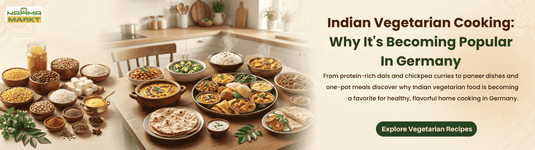
Indian Vegetarian Cooking: Why It's Becoming Popular In Germany
Something has shifted in German kitchens over the past decade. The search for plant-based meals that are genuinely satisfying, nutritionally complete, and interesting enough to cook repeatedly has led a growing number of German home cooks to the same destination: Indian vegetarian food.
This is not a coincidence. Indian vegetarian cooking has been refined over thousands of years into one of the most complete plant-based food traditions in the world. It solves problems that newer vegetarian cuisines are still working out, like how to build flavour without meat, how to make lentils and legumes genuinely satisfying, and how to create meals that are both nourishing and something people actually want to eat again.
Germany's growing appetite for vegetarian curry recipes, lentil curry recipes, and paneer recipes reflects a broader recognition that this tradition has something the rest of the world is only beginning to catch up to. This guide explores why Indian vegetarian food has found such a receptive audience in Germany, what the best entry-point dishes are, and how to build a kitchen that makes vegetarian indian cooking a consistent, enjoyable part of weekly life.
Why Indian Vegetarian Cooking Works So Well in Germany
Plant-Based Protein That Actually Satisfies
Germany has the highest rate of vegetarianism in the German-speaking world and one of the fastest-growing vegan populations in Europe. The challenge most new vegetarians face is the same one: protein. A plate of pasta with vegetables, however well-cooked, does not provide the sustained satiety that meat-based meals do.
Indian vegetarian cooking solves this problem structurally. Every major dal preparation, every legume-based curry, every lentil soup delivers 20–25g of protein per 100g of dry lentil weight. A bowl of toor dal with rice provides more protein than most people assume from a meatless meal, and it does so in a format that is deeply satisfying.
This is exactly what the vegetarian protein meals conversation in Germany has been missing: a food tradition where high plant-protein meals are the norm rather than a workaround.
Tata Sampann Toor Dal, Tata Sampann Chana Dal, and Tata Sampann Moong Dal are among the most reliable everyday protein sources available. Browse the full Pulses and Lentils collection at Nammamarkt for the complete range of indian lentils Germany families can access.
Affordability Without Compromise
Among budget vegetarian meals, Indian cooking is genuinely exceptional. A kilogram of toor dal costs a fraction of equivalent protein from any animal product. A bag of basmati rice, a few whole spices, and a packet of masala blend can produce a week's worth of dinners for a family of four at a cost that most other cuisines cannot match.
This cost-effectiveness is one of the practical reasons Indian food Germany interest has grown beyond the Indian diaspora into the broader German population. Tight grocery budgets and plant-forward eating goals are both addressed simultaneously.
One-Pot Meals Built for Modern Life
Many of the most beloved Indian vegetarian recipes are inherently one pot vegetarian meals: dal with rice cooked together as khichdi, sambar with all its vegetables and lentils in a single vessel, rajma or chana curry that requires only one pot from start to finish. This simplicity suits the realities of weekday cooking far better than recipes that require multiple components prepared separately.
A Cuisine Built Around Flavour
The single most common reason non-Indian German home cooks give for exploring indian vegetarian cooking is straightforward: they tasted something in a restaurant and wanted to recreate that depth of flavour at home. The characteristic warmth of garam masala, the earthiness of cumin, the brightness of coriander and turmeric — these are flavour dimensions that European vegetarian cooking rarely achieves with the same consistency.
Indian vegetarian food tastes the way it does not because of complexity, but because of a specific understanding of how spices, fat, and heat interact. Once that system is understood, even simple preparations become genuinely delicious.
The Most Popular Indian Vegetarian Dishes for German Home Cooks
Dal: The Entry Point for Indian Lentil Cooking
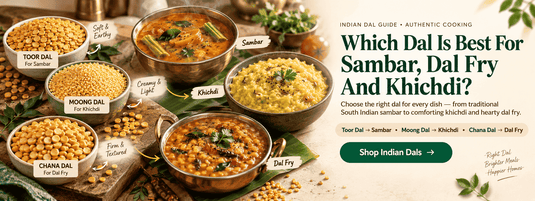
Dal is where most people begin with Indian vegetarian cooking, and for good reason. It is simple, forgiving, and produces consistently satisfying results from the very first attempt. The lentil curry recipe concept central to Indian dal cooking is one of the most approachable entry points for any cook.
How to cook dal in its most basic form: rinse the lentils, cook with water, turmeric, and salt until soft, then pour a hot tempering of cumin seeds, garlic, and dried chilli in ghee over the top. This is all that is needed for a dal tadka that is genuinely good.
Tata Sampann Toor Dal is the most widely used everyday dal and the best starting point. Tata Sampann Moong Dal is lighter and faster-cooking, ideal for quick weeknight meals. Tata Sampann Chana Dal has a firmer texture and higher protein content. Udhaiyam Masoor Dal cooks in under 15 minutes without soaking, making it the most time-efficient option.
All are available at Nammamarkt through the Pulses and Lentils collection.
Chana Masala: The Chickpea Curry Recipe German Cooks Love
The chickpea curry recipe that German home cooks search for most often is chana masala: chickpeas cooked in a tangy, spiced tomato-onion base. It is one of the most nutritionally complete healthy indian vegetarian meals available, delivering substantial protein and fibre from the chickpeas alongside the antioxidant benefits of tomatoes and spices.
Kabuli Chana (Chickpeas) available at Nammamarkt gives the authentic texture that canned chickpeas cannot achieve. The spice base requires Aachi Garam Masala, Aachi Coriander Powder, Aachi Turmeric Powder, and Aachi Chilli Powder, all available through the Spices collection at Nammamarkt.
Rajma: Red Kidney Bean Curry
Rajma Red Kidney Beans cooked in a rich, slow-simmered tomato and onion masala is one of the most popular vegetarian dishes in North Indian cooking. The finished curry has a depth and richness that surprises first-time cooks who expect something light. Served with basmati rice, it is a complete, satisfying meal that rivals any meat-based equivalent in terms of flavour and satiety.
Rajma is also one of the best budget vegetarian meals in the Indian repertoire: kidney beans are inexpensive, store well dry, and produce a large volume of finished curry from a relatively small amount of raw ingredient.
Paneer: The Vegetarian Protein That Keeps Its Shape
Paneer is the fresh Indian cheese that features in some of the most popular paneer recipes in Indian cooking: palak paneer, paneer butter masala, paneer tikka, matar paneer. Its defining quality is that it does not melt when heated, which makes it behave more like a meat protein in curries and grills than any other dairy product.
For German home cooks looking for easy indian vegetarian recipes that use a familiar protein-like ingredient in an unfamiliar way, paneer is one of the most satisfying discoveries. It absorbs the flavours of whatever it is cooked in while maintaining its texture, and it works both in curry sauces and on a grill or in a pan.
Vegan indian recipes that want to replicate paneer's role can use firm tofu in most preparations with reasonable results, though the flavour profile differs.
Paneer is available at Nammamarkt.
Rice and Roti: Building the Foundation
Every Indian vegetarian meal is built around either rice or bread. The choice of which to use affects how the dish feels and how the meal is assembled.
India Gate Classic Basmati Rice and Daawat Traditional Basmati Rice are the benchmark options for everyday rice. Their long, fragrant grains separate cleanly and provide the neutral, aromatic base that dal and curry need. Browse the Rice collection at Nammamarkt for the full range.
Aashirvaad Whole Wheat Atta and Fortune Chakki Fresh Atta are the most trusted atta brands for making roti, chapati, and paratha. Indian atta is milled differently from German whole wheat flour, producing a finer, more extensible dough that rolls thin and puffs correctly during cooking. Both are available through the Atta, Flour and Sooji collection at Nammamarkt.
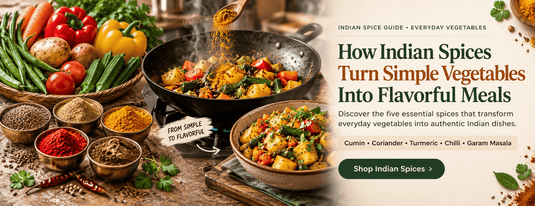
The Spice System: Why Indian Food Tastes Different
One of the first questions German home cooks ask when exploring Indian vegetarian cooking is why the flavour is so much more complex than anything they have cooked before. The answer is the spice system.
Indian vegetarian cooking does not use spices as seasoning in the way that European cooking uses salt and pepper. It uses spices as building blocks, each added at a specific moment in the cooking process to achieve a specific effect.
MDH Kitchen King Masala and Everest Garam Masala are the most practical entry points for cooks who want authentic Indian spices Germany results without building complex spice blends from scratch. Kitchen King is cooked into the base of a dish. Garam masala is added at the end, as a finishing spice. Together they cover the full arc of flavour building in most North Indian vegetarian preparations.
Individual spices that form the backbone of most dishes include Aachi Coriander Powder, Aachi Turmeric Powder, Aachi Chilli Powder, and Aachi Garam Masala, all available through the Spices collection at Nammamarkt.
GRB Ghee is the fat that carries these spices most effectively, adding its own rounded, nutty richness to the dish. Available at Nammamarkt.
For Vegan Cooks in Germany
Vegan indian recipes are more abundant in Indian cooking than in almost any other food tradition, because a large portion of Indian vegetarian cooking has always been dairy-free by default. Dal, chana masala, rajma, sambar, rasam, most rice preparations, and most vegetable curries contain no dairy and require no substitutions.
Where ghee is used, coconut oil or vegetable oil is a straightforward swap. Where paneer appears in a recipe, Aroy-D Coconut Milk can be used to create coconut-based curries that are equally rich and satisfying. Available at Nammamarkt.
For the growing vegan population in Germany seeking vegetarian meal ideas Germany that are genuinely plant-based without feeling restrictive, Indian cooking provides more variety than almost any other cuisine.
Building Your Indian Vegetarian Pantry in Germany
The Indian vegetarian cooking routine becomes sustainable only when the pantry is consistently stocked. These are the indian pantry essentials Germany home cooks need:
Lentils and legumes: Toor dal, chana dal, moong dal, masoor dal, rajma, kabuli chana. Browse the Pulses and Lentils collection at Nammamarkt.
Rice and flour: Basmati rice, whole wheat atta. Browse the Rice collection and Atta, Flour and Sooji collection at Nammamarkt.
Spices: Garam masala, coriander powder, turmeric, chilli powder, Kitchen King Masala. Browse the Spices collection at Nammamarkt.
Proteins: Paneer, kabuli chana, rajma.
Convenience: MTR Ready Mix Upma and Aroy-D Coconut Milk for quick preparations.
Easy Indian Vegetarian Recipes to Start With
For anyone beginning their Indian vegetarian cooking journey, these three dishes provide the best return on effort invested.
Dal Tadka uses Tata Sampann Toor Dal, turmeric, a simple tomato base, and a cumin and garlic ghee tempering. It is one of the most forgiving easy indian vegetarian recipes and produces consistently excellent results from the first attempt.
Chana Masala uses Kabuli Chana, onion, tomato, and a combination of coriander powder, turmeric, chilli, and garam masala. This chickpea curry recipe is one of the most searched vegetarian curry recipes for good reason: it is satisfying, freezes well, and improves with reheating.
Palak Paneer uses Paneer, fresh spinach, onion, tomato, and spices. Among all paneer recipes, this is the most universally appealing to new cooks and consistently the recipe that creates long-term indian vegetarian cooking converts.
Final Thoughts
Indian vegetarian food has become popular in Germany because it solves real problems: it is genuinely high in plant protein, affordable enough for budget-conscious households, rich enough in flavour to replace meat-based meals without compromise, and flexible enough to accommodate vegan, vegetarian, and flexitarian eating patterns simultaneously.
For anyone in Germany looking for vegetarian meal ideas Germany that are substantive rather than supplementary, Indian vegetarian cooking is the most complete available answer.
Nammamarkt carries everything needed to build this cooking routine from scratch, with the Rice, Pulses and Lentils, Spices, and Atta, Flour and Sooji collections covering every category, delivered across Germany.
FAQs
1. Why is Indian vegetarian food becoming popular in Germany?
German consumers are increasingly plant-forward in their eating, and Indian vegetarian cooking offers something most European vegetarian cuisines don't: genuinely satisfying meals built around high-protein lentils and legumes, complex spice-driven flavour, and affordability. Vegetarian curry recipes, lentil curry recipes, and paneer recipes have all seen substantial search growth in Germany as awareness of this tradition has grown.
2. What are the easiest Indian vegetarian recipes for beginners?
Dal tadka, chana masala, and palak paneer are the three most accessible entry points. All use a small set of spices, straightforward technique, and produce consistently good results. Easy indian vegetarian recipes built around these three dishes are a reliable starting point. All ingredients are available at Nammamarkt.
3. Is Indian vegetarian food suitable for vegans?
Yes. Most Indian vegetarian food is naturally vegan: dal, rajma, chana masala, sambar, and most rice-based dishes contain no dairy. Where ghee is used it can be swapped for oil, and where paneer appears, tofu or coconut-based sauces using Aroy-D Coconut Milk work well. Vegan indian recipes are among the most naturally abundant in any food tradition.
4. Where can I buy Indian vegetarian cooking ingredients in Germany? Nammamarkt is the most comprehensive source for indian pantry essentials Germany home cooks need. The Pulses and Lentils, Rice, Spices, and Atta, Flour and Sooji collections cover the full range needed for Indian food Germany cooking at home, with delivery nationwide.
5. How much protein does Indian vegetarian food provide?
Lentils and legumes used in Indian vegetarian cooking provide 20–25g of protein per 100g dry weight. A portion of dal tadka with rice provides protein comparable to a small chicken breast. Among vegetarian protein meals, Indian dal-based cooking is one of the most efficient plant-protein delivery systems available, which is one of the core reasons it resonates so strongly with the healthy indian vegetarian meals conversation in Germany.
6. What Indian spices do I need to start cooking Indian vegetarian food?
The core starting set is garam masala, coriander powder, turmeric, and chilli powder. Aachi Garam Masala, Aachi Coriander Powder, Aachi Turmeric Powder, and Aachi Chilli Powder are all available through the Spices collection at Nammamarkt, one of the best sources for Indian spices Germany home cooks need to build an authentic pantry.