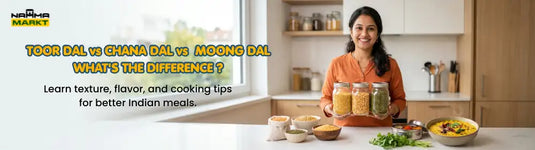
Toor Dal Vs Chana Dal Vs Moong Dal: What’s The Difference
If you’ve ever explored Indian cooking, you’ve likely noticed that lentils, commonly known as dal, come in many varieties. While they may look similar at first, each type has its own role in cooking, from texture and taste to how it absorbs flavours.
Understanding the difference between toor dal vs chana dal vs moong dal helps you make better cooking choices. Instead of guessing, you’ll know exactly which dal to use depending on the dish you’re preparing.
If you’ve searched for toor dal vs chana dal, moong dal vs toor dal, or even which dal is healthiest, you’re not alone. These are some of the most common questions for anyone trying to understand Indian lentils.
Understanding Dals in Everyday Cooking
In Indian kitchens, dal is both an ingredient and a finished dish. When people talk about types of dal, they are referring to different split lentils used across a wide range of recipes.
What makes each dal unique is how it behaves during cooking. Some become soft and creamy, while others retain their shape. This is why understanding Indian lentils explained is essential for better cooking results.
Popular Types of Dal You Should Know
While this guide focuses on three main dals, there are several types of dal used in Indian cooking.
Some commonly used options include:
- Toor dal (pigeon peas)
- Chana dal (split chickpeas)
- Moong dal (split mung beans)
- Masoor dal (red lentils)
- Urad dal (black gram)
Knowing these helps you build a complete Indian lentils guide and gives you more flexibility in your kitchen.
Quick Comparison: Toor Dal vs Chana Dal vs Moong Dal
To understand the difference between dals, here’s a simple breakdown:
- Toor dal – soft, smooth, and ideal for everyday meals
- Chana dal – firm, slightly nutty, and adds texture
- Moong dal – light, quick-cooking, and easy to digest
This quick comparison already gives a practical foundation.
1. What Is Toor Dal?
What is toor dal?
Toor dal is one of the most commonly used lentils in Indian cooking. It cooks into a smooth consistency, making it perfect for daily meals.
Common products include:
Toor Dal Benefits
Toor dal is often used for its balance of taste and nutrition.
- Good source of plant-based protein
- Suitable for everyday cooking
- Blends well into smooth curries
When looking at protein in toor dal, it provides a steady and reliable source of protein.
2. What Is Chana Dal?
Chana dal is made from split chickpeas and is known for its firm texture. It does not become mushy easily, which makes it useful in dishes where structure matters.
Check our product:
Chana Dal Benefits
Chana dal is often chosen for its nutritional value and texture.
- High in protein and fiber
- Keeps you fuller for longer
- Adds depth to dishes
Because of this, it is often recommended when looking for the best dal for protein vegetarian diets. The protein in chana dal is slightly higher compared to other dals.
3. What Is Moong Dal?
Moong dal is known for being light and easy to cook. It requires minimal preparation and is widely used in simple meals.
Products include:
Moong Dal Benefits
Moong dal is ideal for light and balanced meals.
- Easy to digest
- Quick cooking time
- Suitable for regular use
When exploring moong dal nutrition, it offers a balanced mix of protein and essential nutrients.
Moong Dal vs Toor Dal vs Chana Dal: Key Differences
When comparing moong dal vs toor dal or chana dal vs moong dal, the differences become clearer in real cooking situations.
- Moong dal cooks fastest and feels light
- Chana dal takes longer and remains firm
- Toor dal provides a balanced texture
Each dal serves a different purpose, which is why many kitchens include all three.
Dal Nutrition Comparison
Understanding dal nutrition comparison helps in making better dietary choices.
- Protein: Chana dal has slightly higher protein
- Digestibility: Moong dal is easiest to digest
- Balance: Toor dal is ideal for daily meals
So when asking which dal is healthiest, the answer depends on your needs.
Best Dal for Protein in Vegetarian Diets
If you’re focusing on Indian vegetarian protein sources, dals play an important role.
Here’s a simple way to look at it:
- Chana dal → higher protein
- Moong dal → balanced and easy to digest
- Toor dal → consistent everyday protein
Rotating between them is the most practical approach.
Which Dal Should You Use for Different Recipes?
Instead of using one dal for everything, it helps to match the dal with the dish.
Toor Dal Works Best For:
Chana Dal Is Ideal For:
- Thick curries
- Dry dishes
- Recipes with texture
Moong Dal Is Perfect For:
This is where the difference between dals becomes useful in daily cooking.
Common Mistakes to Avoid When Cooking Dal
Even though dal is simple to prepare, small mistakes can affect the result.
- Not rinsing dal properly
- Using incorrect water ratio
- Overcooking or undercooking
- Skipping proper seasoning
Avoiding these improves consistency and flavour.
Dal vs Lentils: What’s the Difference?
A common question is the dal vs lentils difference.
This distinction becomes clearer with regular cooking.
What Is the Difference Between Toor Dal, Chana Dal, and Moong Dal?
The main difference between toor dal vs chana dal vs moong dal lies in their texture, cooking time, and nutritional value.
- Toor dal becomes soft and smooth
- Chana dal remains firm and slightly nutty
- Moong dal is light and quick to cook
Each dal is suited for different types of meals.
Exploring More Types of Dal
You can expand your kitchen with:
Exploring more options helps build a complete Indian lentils guide.
Making Dals Part of Your Routine
Once you start using different dals, cooking becomes more flexible. Keeping a mix of dals ensures you’re always prepared for different types of meals.
Today, many people prefer to buy Indian groceries online in Germany, making it easier to maintain a well-stocked kitchen.
Detailed Dal Nutrition Comparison
Understanding nutrition helps you make better choices based on your needs.
Toor Dal Nutrition (Per 100g approx)
- Protein: ~22g
- Fiber: High
- Carbohydrates: Moderate
Chana Dal Nutrition (Per 100g approx)
- Protein: ~25g
- Fiber: Very high
- Carbohydrates: Moderate
Moong Dal Nutrition (Per 100g approx)
- Protein: ~24g
- Fiber: Moderate
- Rich in essential vitamins
Dal Nutrition Comparison Summary
- Protein: Chana dal > Toor dal ≈ Moong dal
- Digestibility: Moong dal > Toor dal > Chana dal
- Versatility: Toor dal > Moong dal > Chana dal
This dal nutrition comparison helps you decide based on your dietary needs.
Final Thoughts
Understanding the difference between dals is a small step that makes a big difference in everyday cooking. Once you know how each dal works, you can cook with more confidence and create meals that feel balanced and satisfying.
Over time, this knowledge becomes second nature, and that’s when cooking truly becomes effortless.
FAQs
1. What is the difference between toor dal and chana dal?
Toor dal is soft and smooth, while chana dal is firmer and more textured.
2. Which dal has the most protein?
Chana dal generally has higher protein content.
3. Is moong dal good for daily consumption?
Yes, it is light, nutritious, and easy to digest.