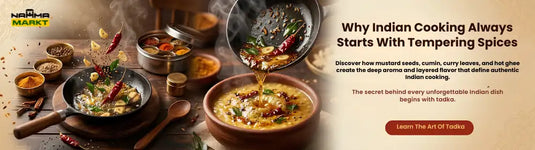
Why Indian Cooking Always Starts With Tempering Spices
If you've ever walked into an Indian kitchen, the first thing you notice is the sizzle. A small pan heats up, oil shimmers, and suddenly mustard seeds pop, curry leaves crackle, and the entire room fills with an aroma that signals something deeply satisfying is about to be cooked. That moment is called tadka, and it is the foundation of authentic Indian cooking.
Understanding what tadka is, why it matters, and how to do it correctly will transform the way you cook Indian food whether you're in Mumbai or Munich. If you're someone trying to cook authentic Indian food in Germany, this guide is for you.
What Is Tadka in Indian Cooking?
Tadka (also called tempering, chaunk, or phodni) is the technique of blooming whole spices in hot oil or ghee to release their essential oils and flavour compounds before adding them to a dish or finishing a dish with them.
The tadka meaning is simple: it is a controlled burst of heat that unlocks the full potential of Indian tempering spices. Without it, the same spices added raw or ground simply don't deliver the same depth or aroma.
This is why Indian cooking always starts with tempering spices or ends with it. Both approaches are used depending on the dish.
Why Tempering Works: The Science Behind the Sizzle
When whole spices hit hot oil, the fat-soluble flavour and aroma compounds inside them dissolve rapidly into the oil. This infused oil then coats every ingredient in the dish, delivering flavour far more evenly than any dry spice could.
This is at the heart of traditional Indian cooking methods and one of the most important Indian cooking techniques passed down through generations.
The result is not just flavour it is Indian food culture preserved in every bite.
The Key Spices Used in Tempering
Understanding spices used in Indian cooking for tempering is essential for any home cook. Here are the most important ones:
1. Mustard Seeds (Rai)
Mustard seeds are almost always the first spice added to hot oil in South Indian and Maharashtrian cooking. They pop and splutter within seconds, which is your signal that the oil is at the right temperature. Mustard seeds tempering is the backbone of dishes like sambar, rasam, and chutneys.
2. Cumin Seeds (Jeera)
Cumin seeds are used across North and South India alike. Cumin seeds in Indian cooking add an earthy, warm depth to dals, rice dishes, and curries. They darken and become fragrant within 20–30 seconds the moment they do, the next ingredient goes in.
3. Hing (Asafoetida)
Hing is one of the most distinctive spices in the Indian spice guide. A tiny pinch added to hot oil transforms into a deep, savoury, almost umami base note. Hing in Indian cooking is especially important in lentil dishes, where it aids digestion as well as flavour.
4. Curry Leaves
Curry leaves are non-negotiable in South Indian tempering. They hit hot oil and release a citrusy, herbal fragrance that is completely unique. Curry leaves tempering is the defining aroma of dishes from Tamil Nadu, Kerala, Andhra Pradesh, and Karnataka.
5. Dried Red Chillies
These are added whole to the tempering oil to provide a slow, rounded heat very different from ground chilli powder added later in cooking.
6. Garlic and Ginger
Sliced garlic and grated ginger are often added after the seeds have bloomed. They caramelise gently in the infused oil, adding sweetness and heat in equal measure.
Choosing the Right Cooking Fat
The fat you use for tempering matters enormously. It is the carrier of flavour and the foundation of the dish.
Ghee
Ghee is the gold standard for tempering in most Indian households. Its high smoke point and rich, nutty flavour make it ideal for Indian spice tempering. A dal finished with a ghee tadka of cumin, dried chilli, and hing is one of the simplest and most satisfying dishes in Indian cooking.
Mustard Oil
Mustard oil is essential in Bengali and Bihari cooking. It has a pungent, sharp character that complements mustard seeds and curry leaves beautifully.
Groundnut Oil
Groundnut oil is widely used across Maharashtra, Gujarat, and Rajasthan for tempering. It is neutral in flavour and has a high smoke point, making it a reliable everyday choice.
How to Make Tadka: Step-by-Step
Learning how to make tadka correctly takes practice, but the fundamentals are straightforward.
What you need:
- A small pan (a dedicated tadka pan works best)
- Your choice of fat (ghee, mustard oil, or groundnut oil)
- Whole spices in order of cooking time
Steps:
- Heat the pan on medium-high flame until it is properly hot.
- Add your fat and let it heat until it shimmers (for oil) or melts and becomes fragrant (for ghee).
- Add mustard seeds first if using wait for the pop.
- Add cumin seeds wait 20 seconds until fragrant.
- Add hing just a pinch, stir immediately.
- Add curry leaves they will splutter, so stand back.
- Add dried red chillies, garlic, or ginger next.
- Pour the entire tadka over your dish immediately, or add your main ingredients to the pan.
This is the Indian seasoning technique that separates a flat-tasting dish from one that is layered, aromatic, and alive.
Tempering in Oil vs Tempering in Ghee
Tempering spices in oil gives a cleaner, lighter result ideal for everyday dals and vegetable dishes. Tempering in ghee gives richness and depth ideal for finishing a dal or making a special-occasion dish. Many cooks do both: start with oil for the main cooking, and finish with a ghee tadka poured on top at serving.
Regional Variations in Indian Tempering
One of the most fascinating aspects of Indian cooking spices is how the same technique produces entirely different results across regions.
North Indian Tempering typically uses ghee, cumin seeds, garlic, dried red chillies, and sometimes bay leaves and cloves. The base is rich and rounded.
South Indian Tempering leads with mustard seeds, curry leaves, hing, and dried red chillies in coconut oil or groundnut oil. The result is sharper, more aromatic, and immediately recognisable.
Maharashtrian and Gujarati Tempering often adds mustard seeds, curry leaves, and green chillies together, with a pinch of sugar in Gujarat.
Bengali Tempering (Phoron) uses a five-spice blend called panch phoron a mix of mustard, fenugreek, nigella, cumin, and fennel seeds added whole to mustard oil.
This regional diversity is why Indian food culture is so extraordinarily rich.
Masalas That Work With Tempering
Once the base tadka is ready, many recipes call for adding a masala blend. Trusted brands like MDH and Everest masalas offer blended spice mixes that integrate beautifully into an established tadka base. Adding a spoon of chana masala or sambar powder after the whole spices have bloomed ensures the ground spices cook in aromatic, infused fat rather than raw oil.
Common Mistakes to Avoid When Tempering
Even experienced cooks make these errors:
- Oil not hot enough spices absorb oil instead of blooming, turning soggy instead of fragrant
- Oil too hot spices burn in seconds, leaving a bitter taste throughout the dish
- Adding spices out of order whole spices need more time than ground spices; always layer in sequence
- Not covering the pan curry leaves and mustard seeds splutter aggressively; a lid or splatter guard helps
- Walking away tempering happens in 60–90 seconds; it requires full attention
Getting the Right Ingredients in Germany
If you're looking to buy Indian spices in Germany or need a reliable Indian grocery store in Germany, sourcing authentic whole spices is the most important step. Many supermarkets stock ground spices, but whole mustard seeds, fresh curry leaves, and quality ghee are harder to find.
Nammamarkt is a trusted destination for Indian groceries in Germany, stocking everything from whole spices to regional oils and masala blends. For anyone who wants to buy Indian groceries online in Germany without visiting multiple stores, Nammamarkt offers a comprehensive selection that makes it possible to build an authentic spice pantry from wherever you are.
From mustard seeds and cumin to hing, curry leaves, and ghee, Nammamarkt carries the authentic Indian spices in Germany that make proper tempering possible.
Quick Reference: Indian Tempering Spices Guide
🌿 Mustard Seeds : Add first for sambar, rasam & chutneys.
🌾 Cumin Seeds : Add after mustard for dal, jeera rice & sabzi.
✨ Hing : Add after cumin to enhance dals & lentil soups.
🍃 Curry Leaves : Add with hing for authentic South Indian flavor.
🌶️ Dried Red Chilli : Add with curry leaves for curries & chutneys.
All these essential Indian tempering spices are available in one place at Nammamarkt
Final Thoughts
Tadka is not just a technique it is the reason Indian food smells the way it does, tastes the way it does, and feels the way it does. Once you understand Indian spice tempering and begin to practise it with confidence, every dish you make will have that unmistakable depth that defines authentic Indian cooking.
Start with whole spices in hot ghee. Listen for the pop. Trust the process.
And if you're building your spice pantry from scratch in Europe, Nammamarkt is the easiest way to buy Indian groceries online in Germany with the quality and authenticity that real tadka demands.
FAQs
1. What does tadka mean in Indian cooking?
Tadka (also called tempering or chaunk) is the technique of frying whole spices in hot oil or ghee to release their essential oils and flavour compounds, which are then added to or used as the base of a dish.
2. Which spices are essential for tempering?
Mustard seeds, cumin seeds, hing (asafoetida), and curry leaves are the most commonly used spices for tempering in Indian cooking. All of these are available at Nammamarkt, one of the best sources to buy Indian spices in Germany.
3. Is ghee or oil better for tempering?
Both work well for different purposes. Ghee adds richness and is ideal for finishing dishes. Mustard oil and groundnut oil are better for cooking-stage tempering in many regional recipes. Nammamarkt stocks all three options.
4. Can I buy authentic tempering spices in Germany?
Yes. Nammamarkt is a reliable Indian grocery store in Germany where you can find whole mustard seeds, cumin, hing, curry leaves, ghee, and all the other ingredients needed for proper tadka. It is one of the most convenient ways to access Indian spices in Germany without visiting a physical store.
5. How does South Indian tempering differ from North Indian?
South Indian tempering leads with mustard seeds and curry leaves in a neutral or mustard oil, creating a sharp and aromatic base. North Indian tempering typically uses ghee with cumin and garlic for a richer, rounder result. Both styles of spices are available at Nammamarkt for anyone looking to cook authentic Indian food in Germany.
6. Does Nammamarkt deliver Indian groceries across Germany?
Yes. Nammamarkt allows you to buy Indian groceries online in Germany with delivery, making it easy to stock your kitchen with everything you need for authentic Indian cooking, including all the core tempering spices covered in this guide.